
Head of Treasury Salary And Pay
Treasury chiefs are the corporate cardiologists—monitoring cash flow, oxygenating growth through funding, and shielding the balance sheet from interest rate and foreign exchange shocks. Because every strategic move ultimately passes through their desk, the role sits on the upper rung of finance and leadership pay scales, just beneath the CFO. A head of treasury’s compensation, therefore, tracks not only the complexity of local banking rules but also the depth of each market’s capital markets activity.
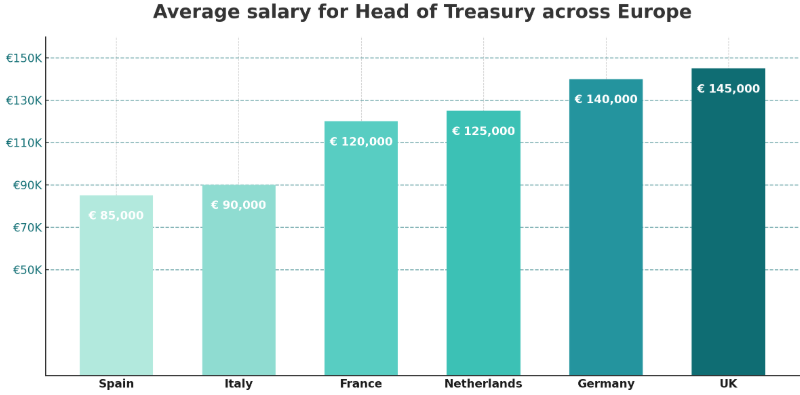
Salaries may vary depending on the industry, experience, and company policies. We based the above figures on estimates from Glassdoor.co.uk.
Across 2025 data, the north-south pay divide remains stark. Southern Europe offers solid six-figure packages by local standards—about €85,000 in Spain and €90,000 in Italy—yet those figures lag well behind the continent’s larger funding hubs. Moving north, remuneration jumps sharply as soon as a job requires steering multi-currency debt programmes: France now averages roughly €120,000, while the Netherlands edges higher at €125,000, thanks to its multinational treasury centres.
At the top end, the premium for expertise in big-ticket capital markets is unmistakable. German heads of treasury pull in around €140,000, reflecting the heavy hedging and liquidity demands of the Mittelstand and DAX giants. The UK remains Europe’s pay leader at roughly €145,000 (≈ £125k), a figure buoyed by London’s bond and derivatives infrastructure and the post-Brexit battle to retain euro-clearing flows. In short, the farther you move into deep, global funding pools, the fatter the pay cheque, underscoring how tightly treasury salaries are wired to the scale of the markets they navigate.
Role of the Head of the Treasury
The role of the head of treasury in a company is dynamic and multifaceted. It encompasses managing cash and optimising investments. It also involves mitigating risks and making informed financial decisions. Additionally, it consists of maintaining solid relationships with financial partners. The head of treasury in a company handles the following:
- Working capital management. Monitor and maximise the working capital available, which includes accounts payable, receivables, and inventory.
- Investment management. Oversee the company’s investment portfolio. Decide where to invest excess funds to generate returns. Ensure capital preservation.
- Debt management. Managing the company’s debt obligations, including issuing new securities and refinancing existing debt.
- Financial reporting and compliance. You must maintain accurate and timely financial records and generate reports on cash, investments, debt, and other treasury activities.

Unsplash+ In collaboration with Getty Images
Perks and Benefits
A career in the treasury is quite rewarding. In addition to base salaries, the head of treasury also receives various perks and benefits. These perks often include performance-based bonuses and stock options. They include executive education allowances, retirement benefits, and health insurance.
Learn more about careers in treasury management. The following articles cover job descriptions and profiles, qualifications, skills, and requirements, as well as how to become one, and more.
Search for Jobs to learn about the treasurer job roles we currently have available.
Job Seekers
On the hunt for your next role? Upload your CV below and we’ll be in touch to discuss your requirements.
Employers
For employers seeking the right skills and cultural fit for your business, send us your vacancy to find out more about how we can help.
Submit CV Send Us Your VacancySearch Jobs
Popular this week
- How Does Industry 4.0 Differ From The Previous Generation?
- What Qualifications And Skills Are Needed To Be An Accountant?
- What Are The Main Differences Between ACA and ACCA?
- Top 10 Skills For A Successful Finance And Accounting Career
- Agile For Accountants: Six Steps To Provide Necessary Tools And Relevant Processes